
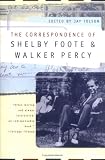
 Speaking of Walker Percy, let me recommend a book that isn’t fiction, but is highly interesting, and sheds some light on his personality. That’s The Correspondence of Shelby Foote and Walker Percy.Published a while back, but still in print. Funny thing, the relaxed, congenial Shelby Foote comes across as the stronger voice, with an openness and an intellectual curiosity--much more so than the rigid and puritan Percy. I suspect Walker swallowed too much Kierkegaard. Foote never had the success as a novelist that Percy did, but he produced a fine history of the Civil War.
  Turns out that what I really want to talk about is words—and not just any words, but real down-home stuff. What started me on this road was coming across a children’s book called Zora Hurston and the Chinaberry Tree (by William Miller). Zora’s mother dies, and she climbs the chinaberry tree and looks out over the world her mother said she would conquer.
 A chinaberry tree. All of a sudden I’m back Home—wind-grieved as the place was. (Thank you, Thomas Wolfe, and Shelby Foote.)

Don’t know if you’ve ever seen a chinaberry tree. We had one in our back yard until we cut it down to make room for a screened-in porch. The last one I saw--that I’m aware of--was on a lonely road in Georgia, next to a dilapidated farmhouse. (How’s that for Southern color?) They were once common in the South, and in other warm parts of the country. I imagine that most have been cut down now: they’re considered an invasive species, brought from India in the nineteenth century as shade trees. Round green crowns, limbs solid as a rock—a great tree for climbing. They produced small flowers that gave way to marble-sized green “berries.” By Fall the berries yellowed and softened into a casing that was filled with slimy, thick liquid around a seed. We kids used to squeeze them and squirt the seed at each other. I’ve heard those little seed pods were poison, but nobody ever died.
We didn’t call them chinaberry trees. In fact, I didn’t hear that name till years later. We called them chaneyball trees. (Pronounced ‘Cheney,’ as in ‘Dick.’)
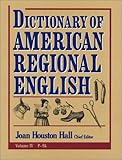 And now I want to recommend another book, or set of books, called The Dictionary of American Regional English. There I found my word for the tree, a word that was in use (with some variations) as far away as Louisiana. (I grew up in North Carolina.) But if I ever wrote a story that had a chinaberry tree in it (and I may plant some in my novel), I don’t think I would call it a chaneyball tree. But maybe I would.
 The Dictionary of American Regional English is a browser’s dictionary, and a wonderful one at that. In a sense, it’s not a reference book at all. If I were reading Faulkner’s The Hamlet, I don’t think it would be necessary to know that ‘rabbit grass’ is a very local, Mississippi name for sedge (the plant we called ‘broomstraw’ in North Carolina)—it’s not important to the understanding of the story. On the other hand, it might be good to know that ‘belly-buster’ (and ‘belly-flop’) was, in some parts of the country, an expression for coasting face-down on a sled on a snowy hill. Could Edith Wharton have used it in Ethan Frome?
But most of all, The Dictionary of American Regional English is just plain fun. It’s like looking through the family album and finding all those faded brownie photographs — a moment from long ago, caught. And like those brownie shots, these words are fading away, replaced by other forms, homogenized.
- ‘Kitty-corner,’ for example, was used (primarily) in the North; ‘catty-corner’ in the South. Who knew?
- Where I grew up, ‘locust’ and ‘katydid’ were both used to mean ‘cicada,’ a word we never used, and probably didn’t know. And there they are, the locusts and the katydids, documented.
- ‘Midges’ are Northern gnats. An even more Northern gnat is a ‘no-see-um.’ (My wife’s mother in Maine says this.)
- In the South we had ‘redbugs.’ We had ‘chiggers’ too — though I never called them that.
- We wonder: were there rules for when you use the pronoun ‘hit’ instead of ‘it,’ in the same dialect?
- And on and on.
Enjoy!
(Also posted at The Writerly Pause.)
